Audience problem
Visitors could not quickly understand the end-to-end offer or distinguish custom production from stock content.

Featured case study
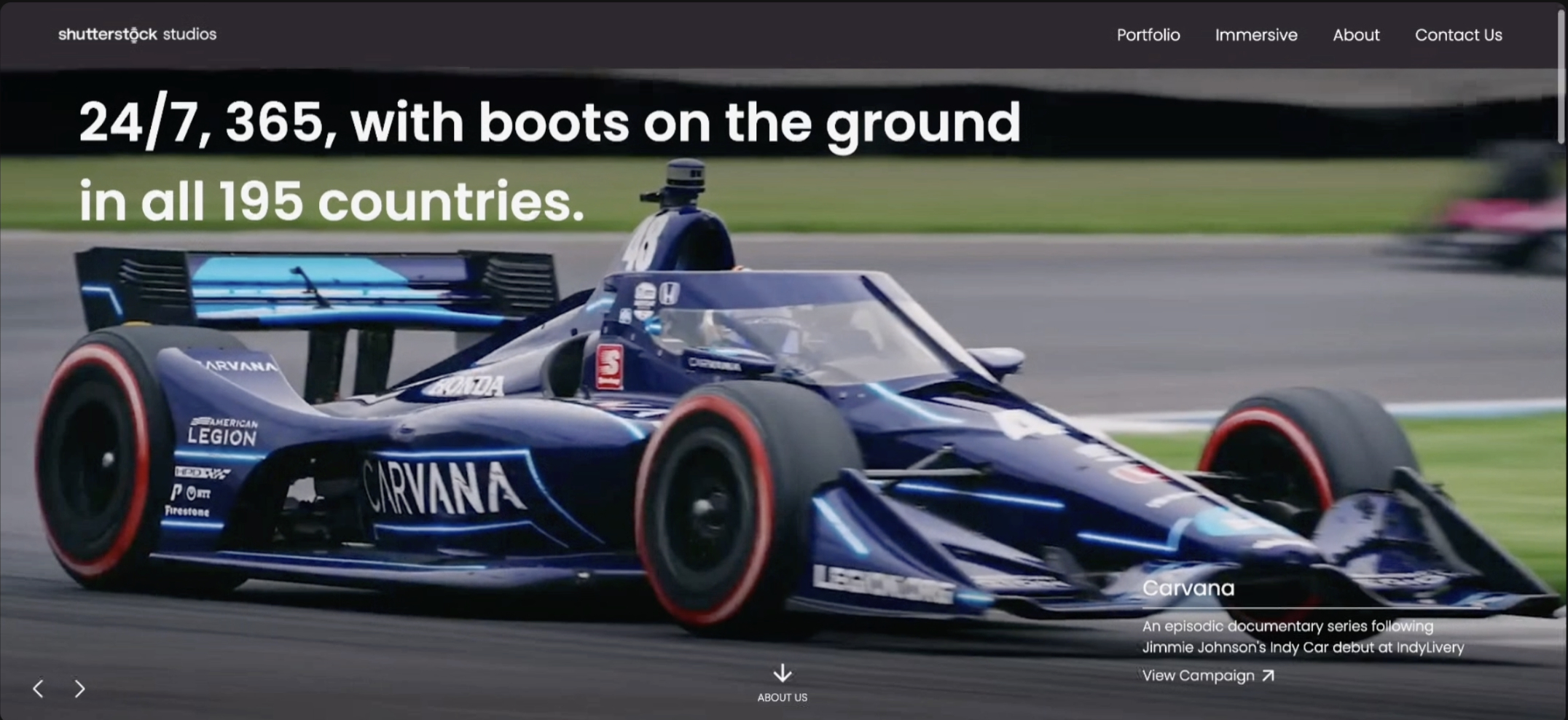
Shutterstock Studios had expanded beyond traditional production into immersive storytelling, virtual production, gaming, and generative AI. Its website still presented a narrower business and reinforced confusion with Shutterstock’s stock marketplace. It no longer gave prospective clients and internal teams a credible destination for the work.
I led an eight-month redesign that made the portfolio the primary storytelling device, clarified Studios as an end-to-end custom production partner, and established a scalable experience within Shutterstock’s design system and Contentful CMS. The work is currently in QA ahead of launch.
The website had not kept pace with the services Studios could offer.
The work itself became the clearest proof of Studios’ value and range.
The redesign moved into QA on Shutterstock’s design system and Contentful.
The company had evolved faster than its digital presence
Studios partners directly with brands to create custom productions from concept through delivery. As the business expanded into new formats and technologies, the existing site made that breadth difficult to understand and sometimes reinforced the incorrect assumption that Studios produced assets for Shutterstock’s stock library.
The gap affected more than perception. Traffic and engagement were low, teams lacked confidence using the website at events or in sales conversations, and custom presentations replaced the site as the primary way to show capabilities.
Visitors could not quickly understand the end-to-end offer or distinguish custom production from stock content.
The outdated site underrepresented current work and was not being used to support prospective-client conversations.
A broad set of services needed to feel cohesive rather than making Studios appear unfocused.
Leading both product definition and design execution
I owned the entire design process and led the project largely independently, with support from a product-design contractor at different stages. Because the product manager was a marketing manager filling the role because of personnel constraints, I also guided product definition, requirements, priorities, and PRD development.
Make Studios understandable, memorable, and usable as a client destination
Without launch data yet, success needed to be defined through the quality of the story, stakeholder confidence, implementation readiness, and the site’s ability to scale.
Prospective clients should quickly understand that Studios creates original, end-to-end productions. It does not create stock-library content.
A large mosaic of current portfolio work should demonstrate breadth without making the offer feel unfocused.
Studios teams should have a destination they trust at events and in prospective-client conversations.
New offerings needed to be easy to surface within reusable components and the existing CMS.
Creating a shared definition of the problem before exploring solutions
Stakeholder interviews, competitive research, and content audits revealed where expectations differed across Studios, Brand, Marketing, and Engineering. Two insights became the foundation for the redesign: portfolio work should be the primary storytelling asset, and services needed a clearer structure.
Exploring broadly, then converging around the portfolio
Stakeholders intentionally provided minimal creative direction, so I used a staged process to separate structural decisions from visual preference.
I first defined the homepage hierarchy and the order in which Studios should explain its offer.
Grayscale, bento, and dark-mode concepts helped stakeholders react to complete directions rather than isolated components.
Across directions, the portfolio consistently emerged as the most persuasive storytelling mechanism.
Studios resisted parts of the company-wide rebrand. I aligned teams around shared attributes such as large typography, bleeding imagery, boldness, and polish. This kept the discussion focused on the experience rather than brand compliance.
I designed the ideal experience first, then mapped sections to reusable components where they fit and advocated for new patterns such as the image accordion when they did not.
Although Studios wanted a more flexible CMS, the team retained Contentful for cost and scaling reasons. I adapted components and content structure to work within it.
Looping hover videos and some animation concepts were removed when their loading and implementation cost outweighed the benefit.
Turning competing preferences into an achievable product direction
I facilitated recurring workshops with Engineering and the Design System team to determine which components could be reused, which needed modification, and which should be added to the system. I also aligned Studios leadership, Brand, and Marketplace stakeholders around the navigation, visual identity, and Contentful decision.
The final direction bent where delivery and organizational consistency required it without losing the portfolio-first vision that made the redesign valuable.
The redesigned website presents Studios as a premium creative partner through portfolio-first storytelling, clearer service communication, simplified navigation, and a stronger information hierarchy.
Using the evidence available before launch
The experience is currently in QA, so this case study does not claim customer or lead-generation outcomes that have not yet been measured. The immediate result is a launch-ready site that stakeholders believe more accurately represents the breadth and quality of Studios.
After launch, the team plans to evaluate engagement, portfolio exploration, lead generation, and the website’s effectiveness as a client-facing sales experience.
The most important leadership work happened before the final visuals: creating a shared vision across groups with different goals, then translating that vision into decisions the organization could support and Engineering could deliver.
Explore more work
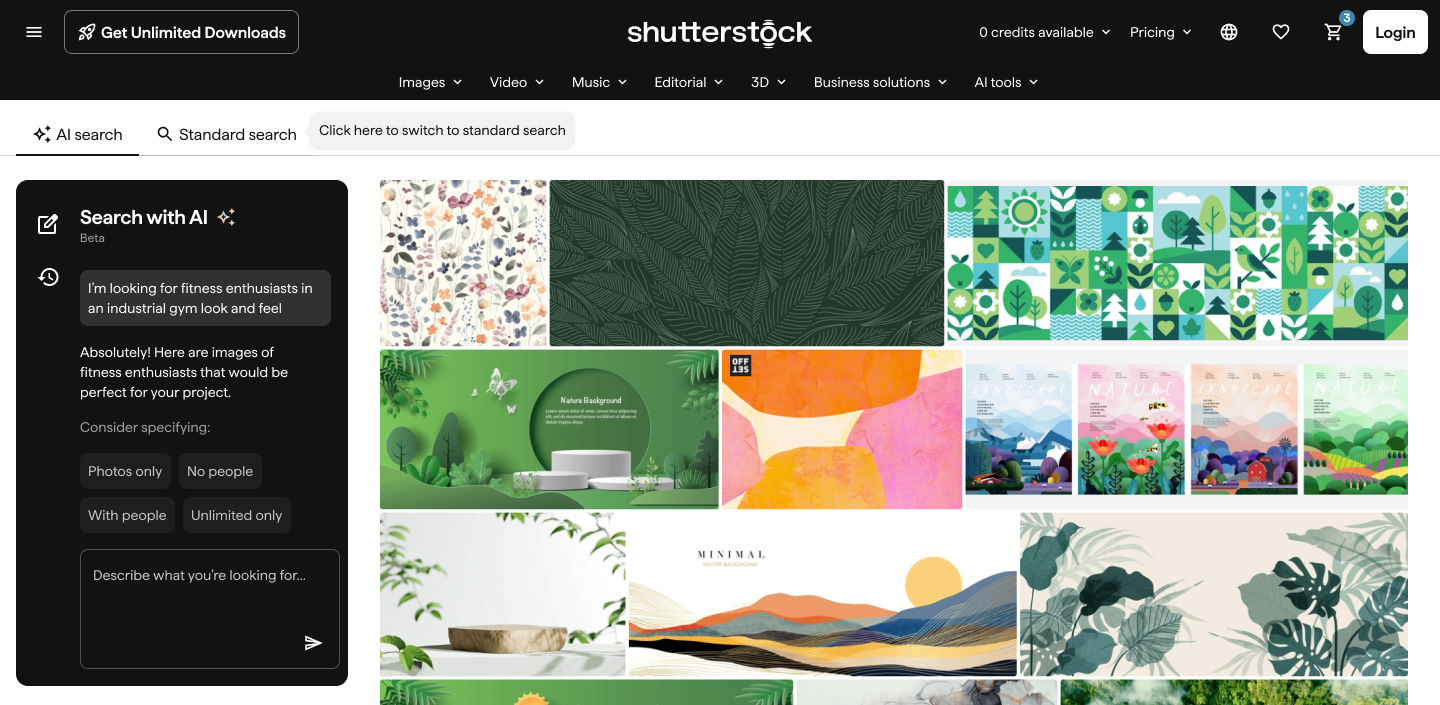 Building conversational searchLearning where AI fits within an established marketplaceView case study
 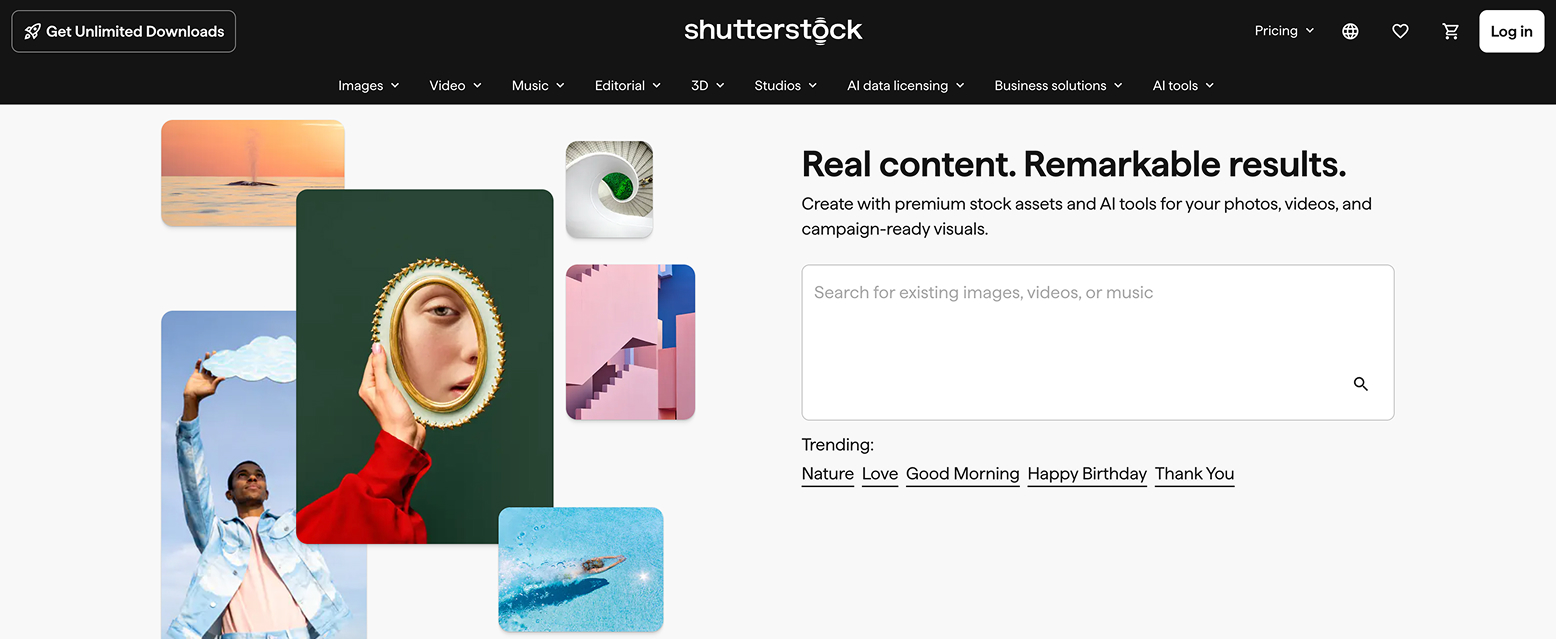 Repositioning Shutterstock for the AI eraConnecting three creative workflows through one starting pointView case study
 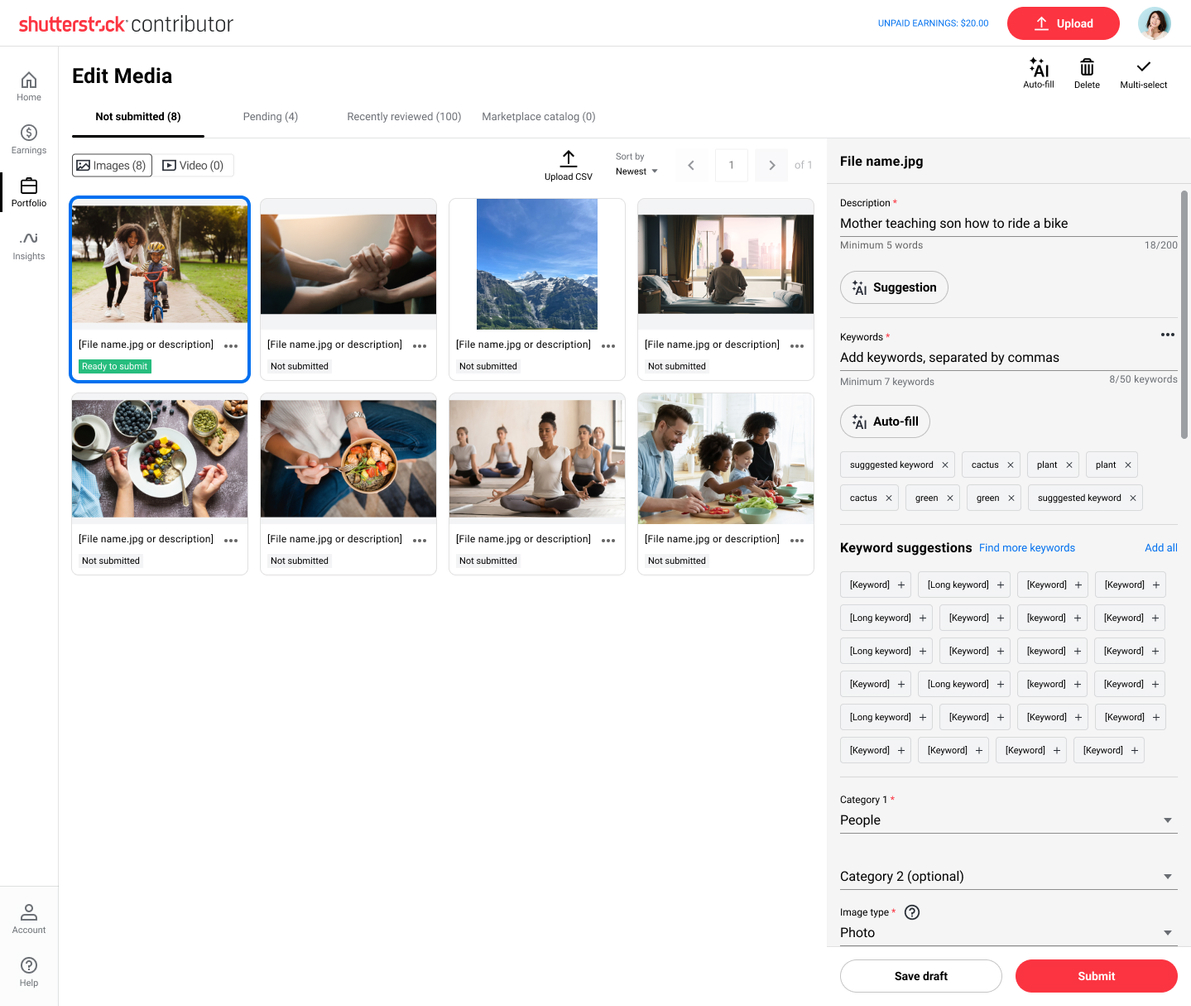 Increasing submission velocityReducing workflow interruption with AI-assisted metadataView case study