Workflow problem
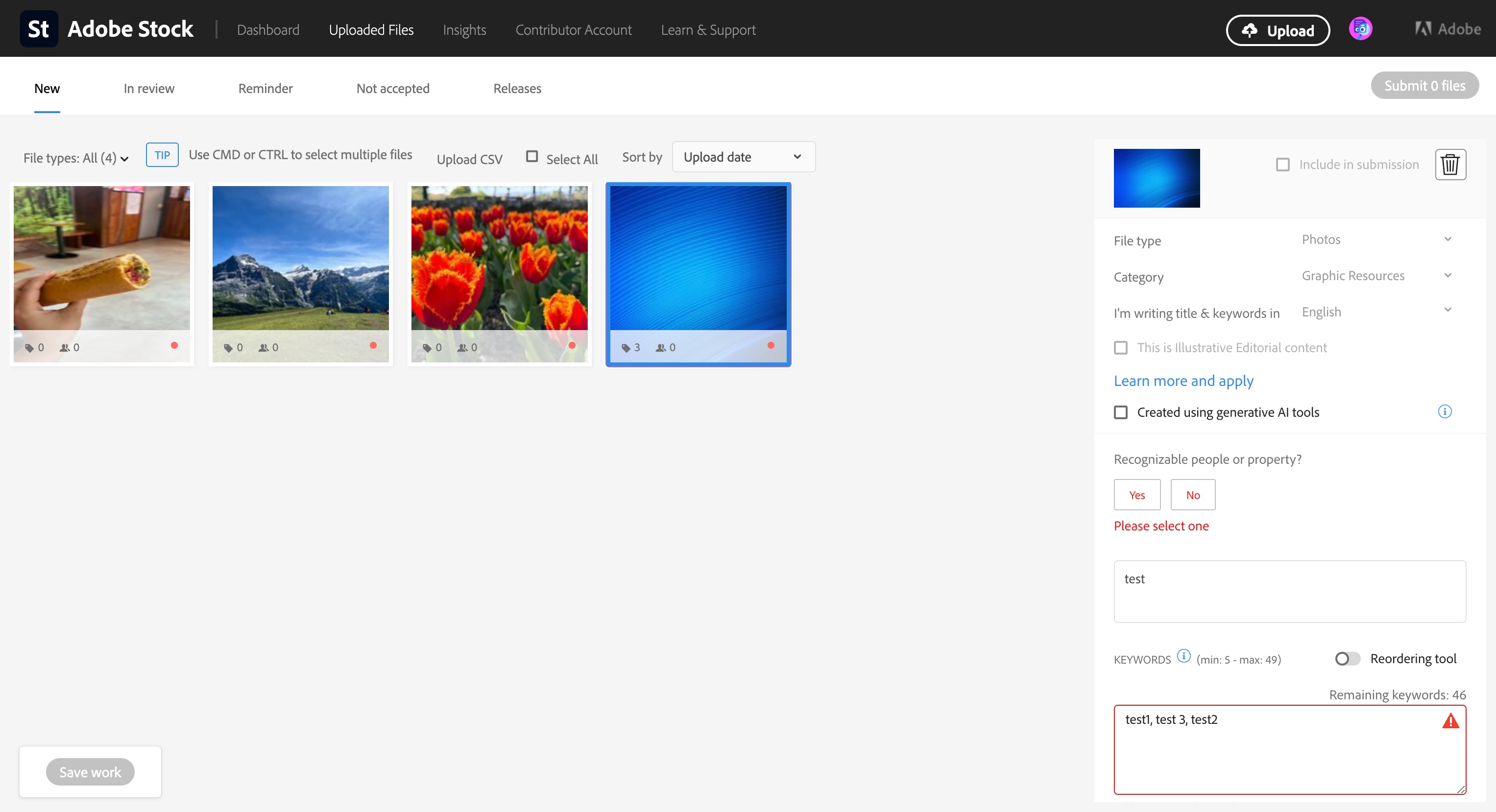
Modal editing added interactions and made it difficult to move quickly between assets.

Featured case study
Shutterstock’s contributor platform powers the supply side of its marketplace, but years of declining engagement and a disruptive editing workflow were slowing high-volume submissions. Contributors spent too much time moving between assets and completing repetitive metadata.
As the sole designer, I led a six-month redesign that restored side-by-side editing, simplified bulk workflows, and introduced AI-assisted metadata autofill. Submission velocity increased by 23%, contributing to 27% library growth in the measured timeframe after launch.
Contributors moved through upload, metadata, and submission more efficiently.
The increase in submission velocity contributed to library growth in the measured timeframe.
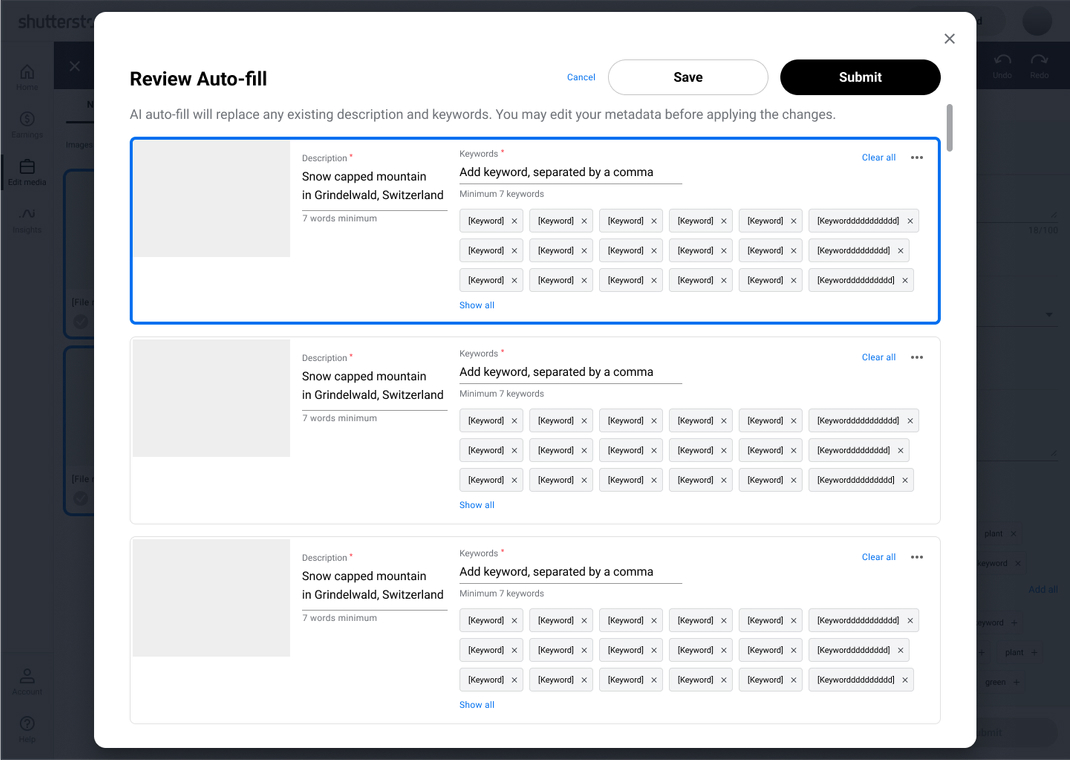
Autofill changed repetitive entry into a review-and-submit workflow.
Supply growth depended on reducing contributor interruption
Contributors upload the images and videos that support customer search, licensing, and emerging AI data products. Engagement and submission activity had been declining for years, and internal strategy work identified the upload-and-submit workflow as a major barrier to reaching contributors’ full content potential.
Modal editing added interactions and made it difficult to move quickly between assets.
Descriptions and keywords created repetitive cognitive work during high-volume submissions.
Submission friction constrained content volume across the supply side of the business.
Leading workflow strategy, interaction design, validation, and delivery
I was the sole designer responsible for the contributor experience. I coordinated across teams whose goals extended beyond interface usability to include contributor growth, moderation requirements, marketplace quality, and legacy-system feasibility.
A visually simpler modal created a slower high-volume workflow
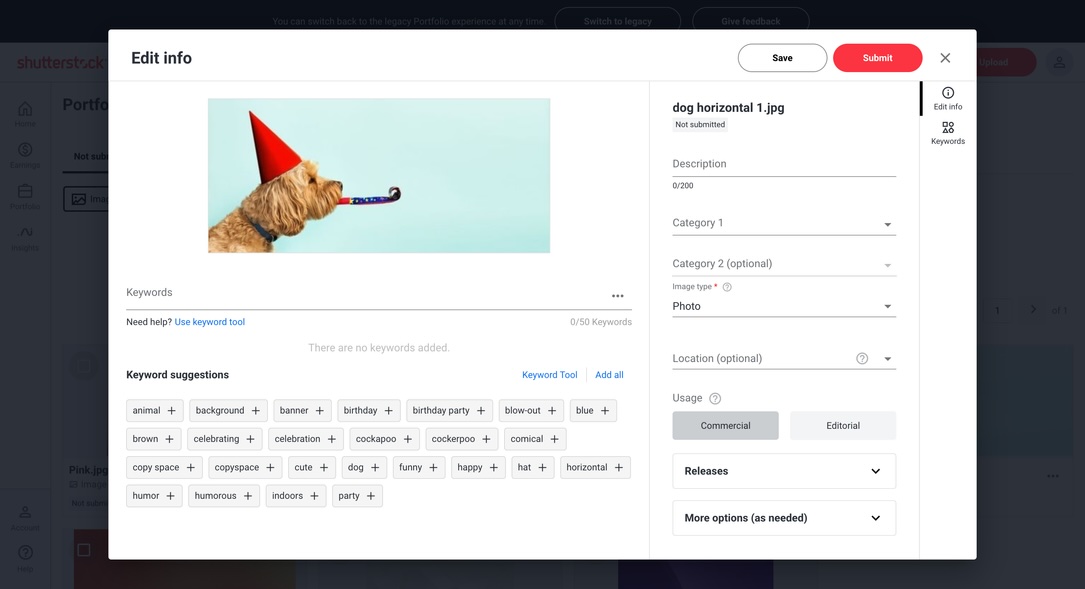
The previous redesign had replaced direct grid editing with a modal. That approach narrowed focus, but it forced contributors through more interactions and made switching between assets harder. Competitor products such as Adobe Stock and Getty Images used the side-by-side pattern contributors already understood.
Protect metadata quality while removing avoidable effort
Stakeholders needed to maintain metadata standards, so the first release could not simply remove required fields. I focused the strategy on workflow continuity, faster bulk review, and automation that preserved contributor control.
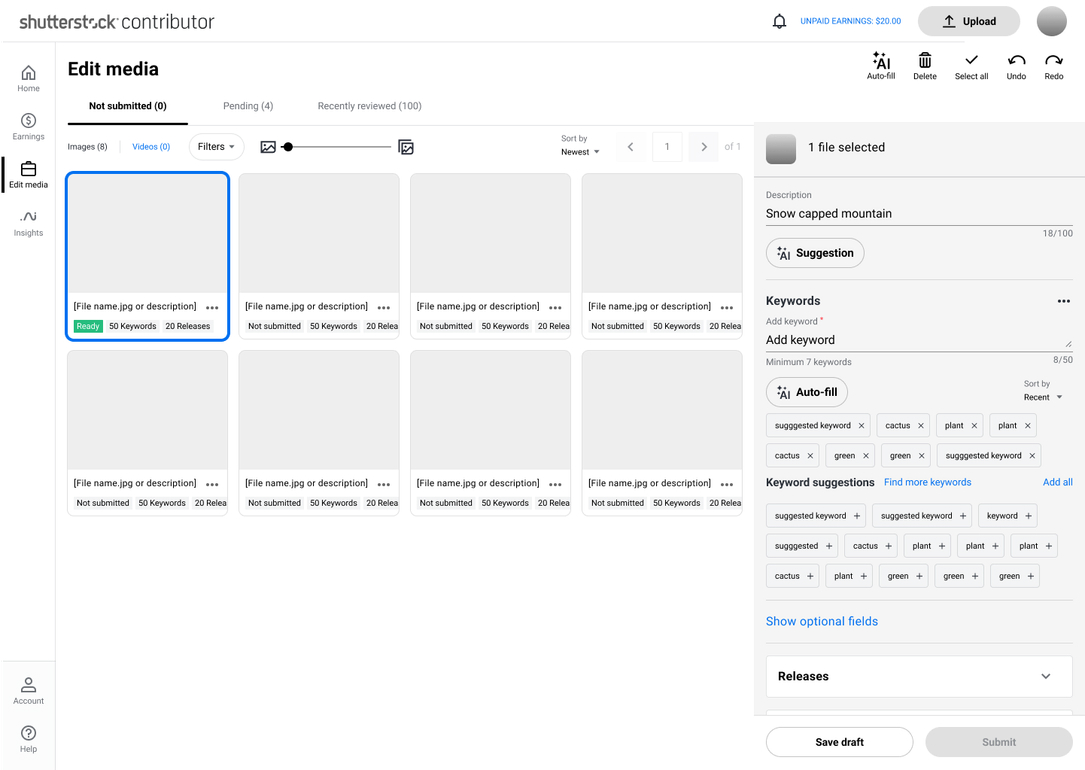
Keep the asset grid and metadata panel visible together to support scanning, comparison, and rapid navigation.
Make essential asset status and metadata easier to review without opening secondary surfaces.
Generate descriptions and keywords so contributors can review instead of starting from blank fields.
Prioritize the highest-friction submission behaviors instead of redesigning every contributor-management workflow at once.
Operational dependencies prevented major field reduction, so the design reduced interaction cost around the requirements instead.
The long-term vision included revealing fewer fields upfront, but initial release constraints required a more direct adaptation.
Collection organization and detailed metadata management were deprioritized.
The team focused on the workflow behaviors most directly connected to content-volume velocity.
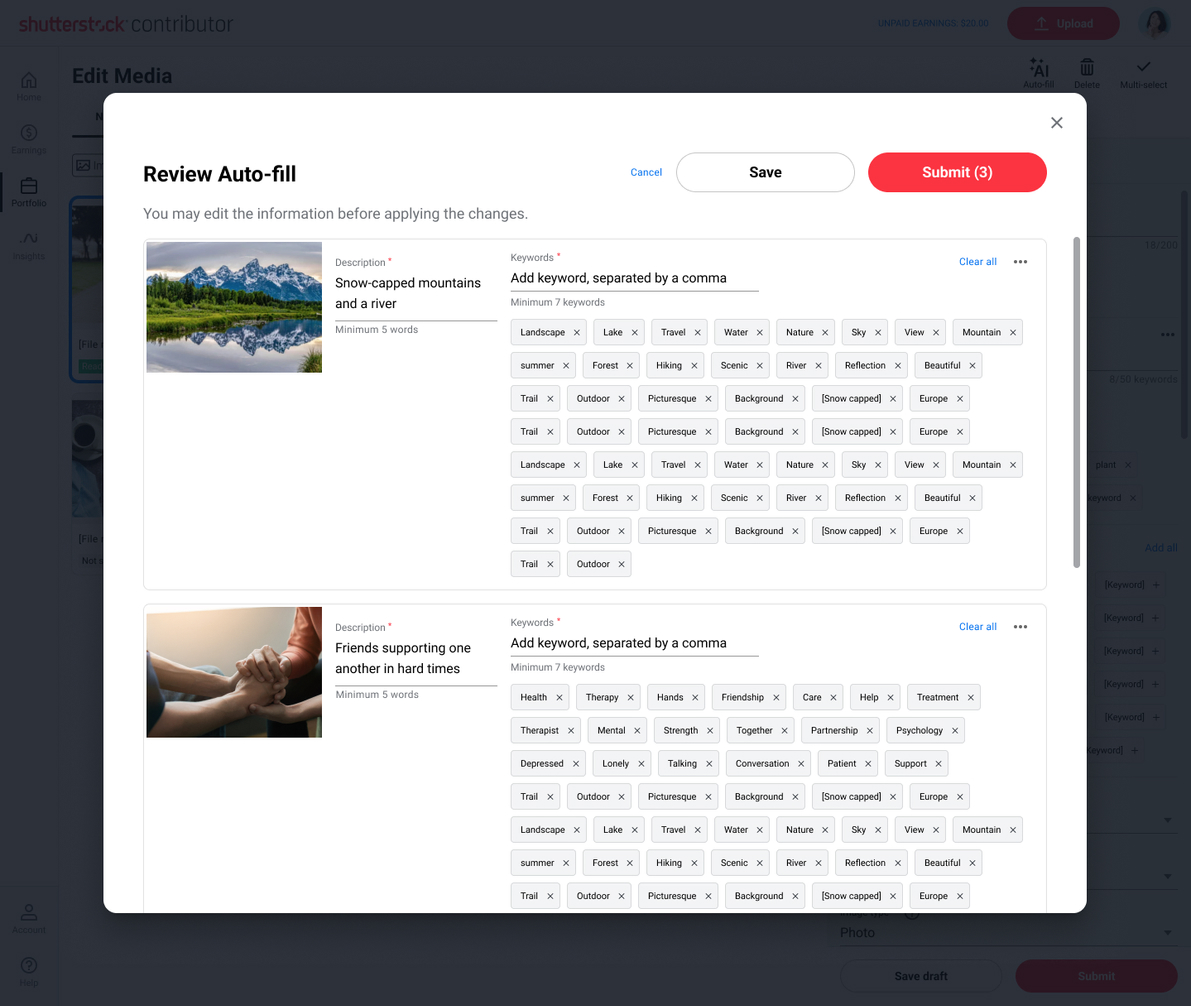
Changing metadata from creation to review
Contributors were already using external AI keywording tools to reduce manual work. I advocated for bringing that behavior into the platform. After upload, Shutterstock scanned selected assets and generated descriptions and keywords for contributors to review, edit, and submit.
The experience accelerated the workflow without removing contributor control over metadata quality or the final submission decision.
Testing whether continuity and automation improved the real workflow
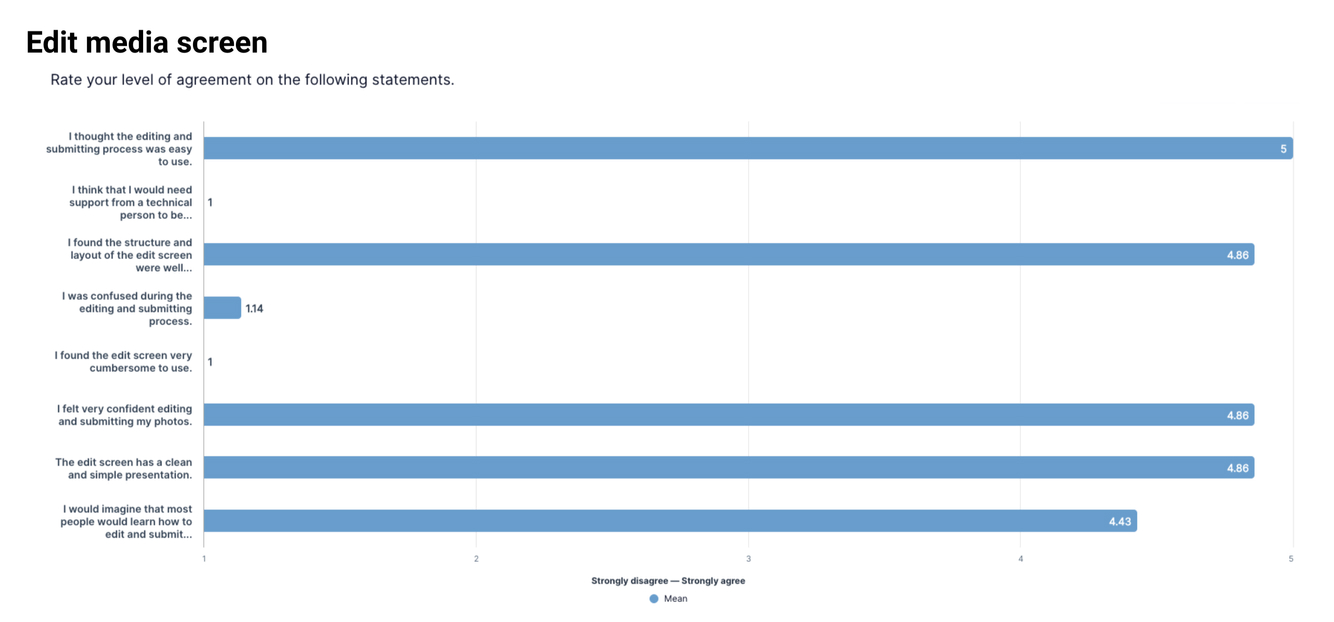
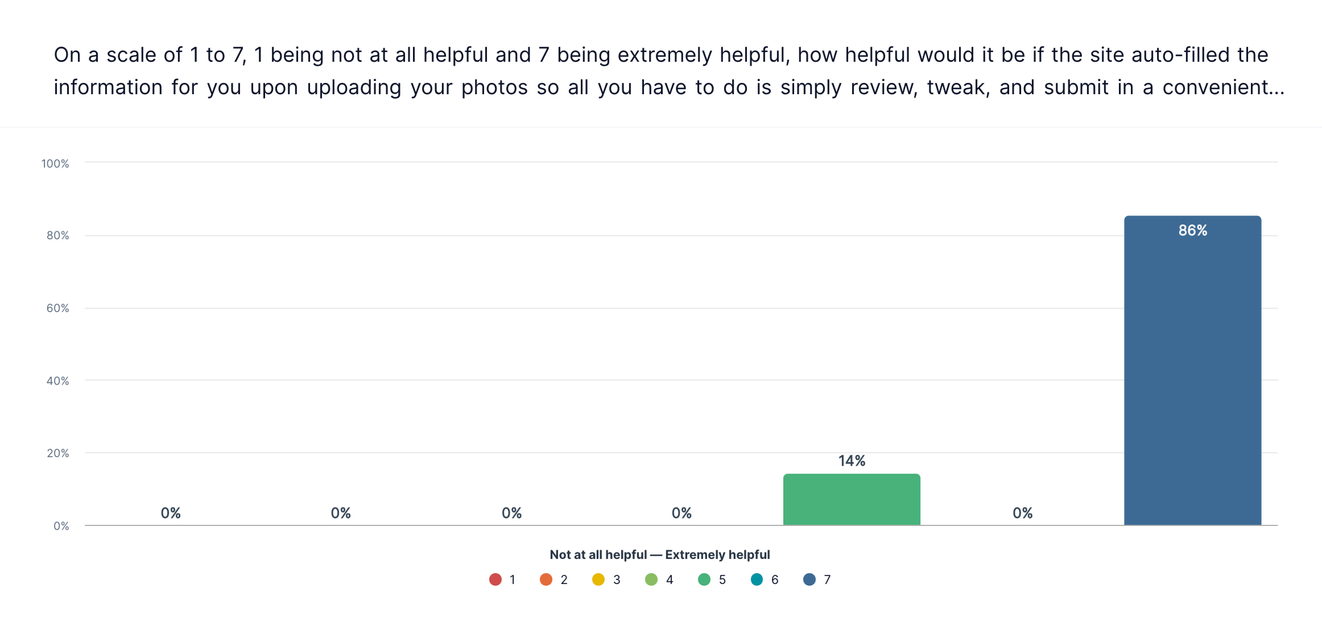
Usability testing showed that contributors could complete metadata and submission tasks more efficiently with less interruption. Participants responded positively to side-by-side editing, and AI Autofill resonated as a meaningful way to accelerate repetitive work.
Aligning user speed with marketplace quality and operational needs
The workflow affected contributor growth, moderation, and content quality at the same time. I worked with Product on growth measures, Engineering on legacy feasibility, Operations on review dependencies, and AI and Data teams on metadata automation.
That shared direction kept the project focused on business impact without turning contributor efficiency into a quality tradeoff.
The final workflow reconnected the asset grid and editing panel, improved visibility across high-volume submissions, and added AI-assisted descriptions and keywords. Contributors could move from upload to review and submission with fewer interruptions.

Faster submission behavior translated into marketplace growth
After launch, submission velocity increased by 23%. That acceleration contributed to a 27% increase in total library growth during the measured timeframe.
The most important lesson was that reducing friction did not require removing contributor control. Restoring workflow continuity and shifting repetitive work from creation to review improved speed while preserving the decisions contributors and operations teams still needed to make.
Explore more work
 Building conversational searchLearning where AI fits within an established marketplaceView case study
  Turning Studios into a credible sales toolAligning an expanded offer with a scalable digital foundationView case study
  Repositioning Shutterstock for the AI eraConnecting three creative workflows through one starting pointView case study